
VR Careers for Students
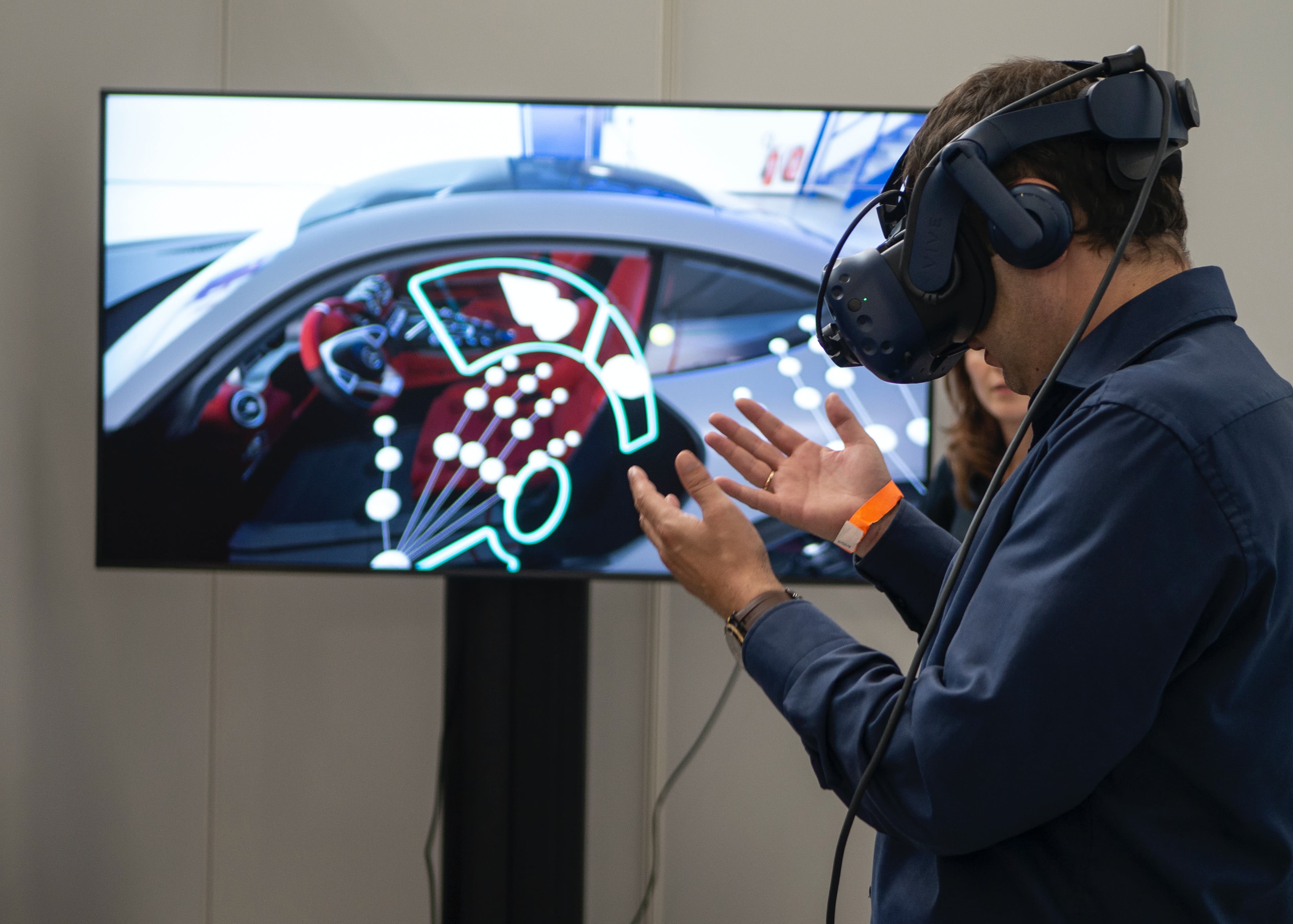

You’ve probably played a VR game, tried a VR demo or at least seen someone exploring a virtual world. But have you ever thought, maybe you could build those worlds instead? With the rise of immersive technologies like Virtual Reality (VR), there’s a growing demand for people who can design, develop and deliver those experiences. The right course will help you position yourself at the forefront of that wave.
Here’s why VR careers look promising, and how the University Malaysia of Computer Science and Engineering (UNIMY) could set you up to succeed.
Why VR Is Becoming Big?
- The VR/AR/XR (extended reality) industry is expanding fast worldwide. Demand for immersive applications — whether gaming, simulation, training, virtual meetings or interactive storytelling, is pushing studios and tech firms to recruit more developers and creators. According to a study analysing AR/VR-job postings, the most sought-after skills include UI/UX design, graphics rendering, asset creation, software design for interactive environments.
- VR is no longer niche. It merges with AI, data processing, visual computing and interactive design. As industries beyond entertainment — training, education, healthcare, architecture, engineering — adopt VR/AR, opportunities grow.
- For you, that means if you master both the technical side (programming, graphics, system design) and the creative/interactive side (UX, UI, immersive experience design), you won’t just be building games — but building experiences that people live in, use and learn from.
So VR is about immersive worlds, real-time interactivity, human–computer interaction and novel user experiences. That opens the door to many kinds of careers.
UNIMY’s Master in Computing — And How It Links to VR
UNIMY’s Master in Computing is a research-based postgraduate programme that allows you to specialise in cutting-edge computing areas.
Some of the research areas listed under this programme, specifically relevant for VR:
- Graphics and Visual Computing — core for rendering, real-time graphics, 3D worlds.
- AR, VR, UI/UX, Game Design and Interactive Apps — explicitly listed among the research areas, meaning you can focus your master’s research or projects on immersive & interactive environments.
- Related fields like Image Processing, Algorithms, Software & Mobile Computing, Cloud and Edge Computing, Networking & Communication — all relevant when you build VR systems, especially those needing performance, online features or multi-user interactions.
UNIMY gives you a flexible, research-driven platform. You could explore VR/AR projects, interactive application prototypes, effectively tailoring your studies to VR-related careers.
UNIMY also highlights its "strong industry connections", experienced faculty and state-of-the-art labs and computing resources, which are valuable when you need hardware, software or industry guidance.
What Kind of VR Careers You Could Pursue
If you choose to target VR through your Master in Computing (or build on relevant undergrad experience), here are some of the careers you could aim for:
- VR/AR Developer or Engineer — building virtual environments, interactive apps, immersive simulations or games.
- UI/UX Designer (for VR/AR) — crafting immersive user interfaces, interaction paradigms suitable for VR, ensuring usability and comfort.
- Graphics / Visual Effects Programmer — working on 3D graphics, rendering pipelines, real-time visual computing, visual optimisation for VR.
- Interactive / Simulation Software Developer — building serious applications beyond games: VR training sims, education, architectural walkthroughs, medical simulation.
- Technical Consultant / Researcher (VR/AR/Interactive Systems) — using your postgraduate research to innovate, perhaps in R&D labs, startups or tech firms exploring next-gen VR solutions.
- Multi-disciplinary Roles — because VR blends computing, design and interaction, roles like “VR Project Manager”, “VR Content Producer / Designer”, “XR Product Designer / Specialist” are also possible — especially in companies pushing immersive content, user experience or industrial VR/AR.
Given how UNIMY frames its Master in Computing, you wouldn’t be limited to one path: you could align your specialisation based on your interests — graphics, AI + VR, networking + multiplayer VR, interactive apps or UI/UX design.
What Makes You a Strong Candidate
If you’re thinking of VR as your path, here’s what helps:
- Strong computing fundamentals (programming, algorithms, software design, graphics, performance) — since VR is at the intersection of software engineering, graphics and user experience.
- Creative and design thinking, user-centred mindset — VR is about immersive and intuitive experiences. Designing for comfort, ergonomics, interactivity, user flow matters.
- Willingness to research & experiment — especially in a master-by-research programme: you’ll likely need to propose projects, experiment with new technologies (graphics libraries, VR engines, rendering, UX).
- Adaptability and breadth — because VR development may involve platforms, cross-discipline collaboration (designers, developers, artists, testers) — being versatile gives you an edge.
- Passion for immersive media, interactivity and pushing boundaries — VR is still evolving. Interest and willingness to learn new tools (game engines, VR SDKs, graphics pipelines, maybe AI) will set you apart.
VR Could Be a Great Future for You
- VR is growing globally — demand for developers, creators and specialists is rising as more industries adopt immersive tech.
- You don’t have to limit yourself to “game-only.” With VR, you could work in education, training, simulation, design, research, even health or architecture.
- By studying at UNIMY, you get access to research-oriented computing education, relevant modules/areas (graphics, interactive apps, UI/UX) and opportunities to build real-world — or experimental — projects under guidance.
- As a student, you have time to learn, experiment, build prototypes, learn tools — which will make you more employable or ready for further research.



 Built with Shorthand