
Top 5 Study Hacks That Help You Survive Exam Season


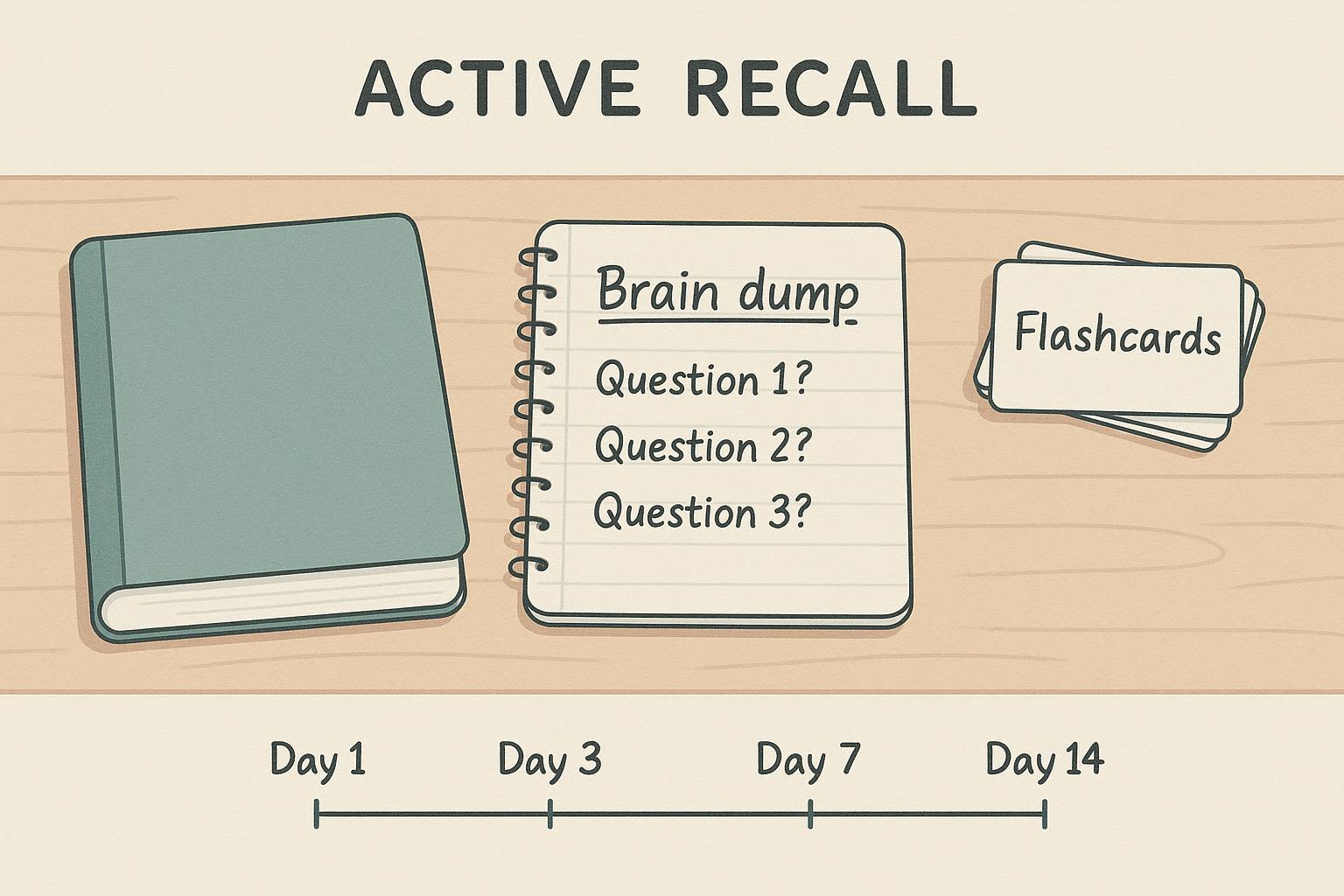
1. Use Active Recall Instead of Re-Reading
If you are re-reading notes over and over, you are doing what feels productive, not what works.
Cognitive science research consistently shows that active recall improves long-term retention far more effectively than passive review.
This means testing yourself without looking at your notes. American Psychological Association explains that retrieval practice strengthens memory pathways and improves learning outcomes.
How you apply this
- Close your book and write down everything you remember about a topic
- Use flashcards properly, not casually
- Teach a friend a concept without checking notes
If you struggle to recall something, that is good. It means your brain is working.

2. Space Your Study Sessions
Cramming feels heroic. It is not effective.
The “spacing effect” is one of the most replicated findings in psychology. Studying material over spaced intervals significantly improves retention compared to cramming.
Association for Psychological Science highlights decades of research showing distributed practice enhances memory consolidation.
How you apply this
- Review lecture material within 24 hours
- Revisit it again one week later
- Do a final revision before exams
Instead of one brutal 6-hour session, break it into 1-hour sessions across multiple days.

3. Practice with Past-Year Questions Under Timed Conditions
Many students “understand” content but freeze in exams.
Exam performance is partly about familiarity with format and time pressure. University academic support centres consistently recommend practising past-year papers under timed conditions to improve exam readiness.
For example, University of Oxford advises students to practise answering questions within time limits to improve structure and clarity under pressure.
How you apply this
- Set a timer for 45 minutes
- Attempt one full essay or problem question
- Mark it critically against model answers
You train your brain to think clearly when it matters most.


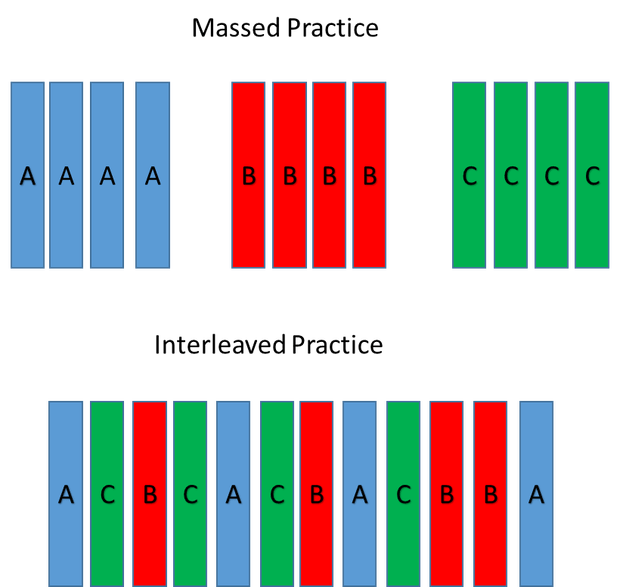
4. Use Interleaving to Strengthen Understanding
Instead of studying one topic for hours, mix related topics in one session.
Research shows that interleaving, which means switching between related concepts, improves problem-solving and long-term mastery. Harvard University researchers have highlighted how varied practice strengthens learning compared to blocked study.
How you apply this
If you are studying law:
- Review Contract law for 40 minutes
- Switch to Tort law for 40 minutes
- Then return to Contract law practice questions
Your brain learns to differentiate concepts more effectively.

5. Sleep More Than You Think You Should
Pulling all-nighters feels productive. It is not.
Sleep plays a critical role in memory consolidation. National Institutes of Health reports that sleep strengthens neural connections that form memories and improves cognitive performance.
How you apply this
- Aim for 7 to 9 hours before exams
- Stop studying at least 30 minutes before bed
- Avoid screens right before sleep
If you sacrifice sleep, you sabotage recall.