
VR in Tourism: What’s Next?
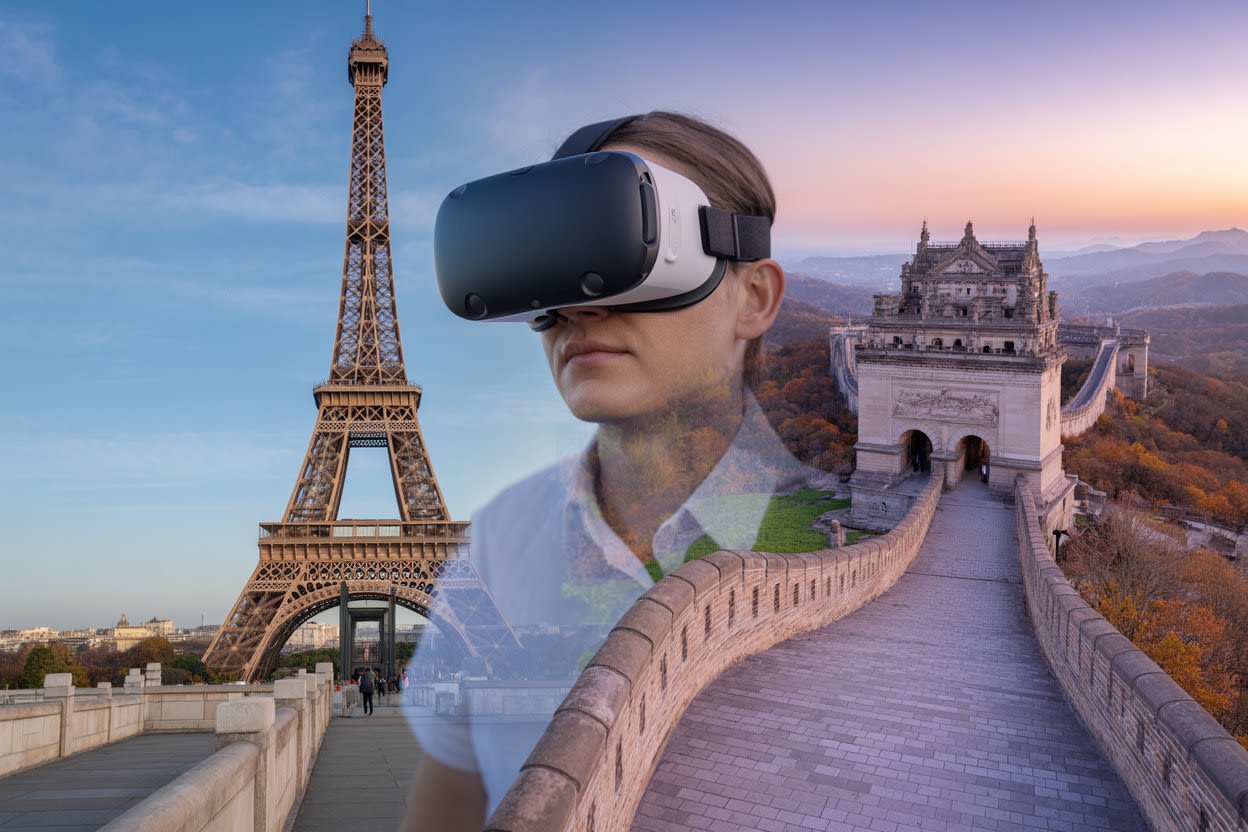

You know how booking a holiday used to mean flipping through glossy brochures, Googling hotel photos and crossing your fingers that what you see online matches reality. Well, that’s changing fast. Immersive technology like virtual reality (VR) is transforming the way we explore, plan and experience travel.
In this article, you’ll get a sense of where VR is heading in tourism.
Why VR Is Turning Heads in Tourism
Virtual Previews: Try Before You Fly
VR gives you a chance to “visit” a destination before you commit. Instead of wondering if the hotel room, resort layout or cultural site lives up to the brochure, you can walk through it, look around and get a real sense of space, ambience and even vibe. Studies show that VR experiences can trigger strong mental imagery and emotional responses, which heighten interest and increase the likelihood of actual bookings or visits.
A More Immersive, Emotional Way to Explore Culture & Nature
VR isn’t just about hotels. It’s ideal for museums, heritage sites, cultural festivals or remote natural attractions. You can explore a historic temple, stroll through a cultural heritage site or wander a rainforest, all from your living room. This doesn’t just give you a glimpse of a place; it creates emotional engagement, interest and awareness.
Boosting Confidence and Reducing Booking Anxiety
Because travel, especially to unfamiliar places, often feels like a gamble, VR helps reduce uncertainty. A virtual tour helps you know exactly what you’re getting: room layout, facilities, cultural context, local surroundings. That clarity builds confidence, making you more likely to proceed with the booking. In fact, research in hospitality contexts reports that virtual tours significantly increase customer satisfaction and booking confidence.
Accessible and Inclusive: Opening Up Tourism to More People
Not everyone can travel, for financial, physical or other reasons. VR democratises tourism: people who might never be able to physically visit certain places can still experience them virtually. That means broader access to cultural and natural heritage and more inclusive travel opportunities.
What’s Coming: VR Futures in Tourism
Virtual Destinations and Digital Twins
With advances in technology, VR is evolving beyond short “teasers.” The concept of “digital twins” — realistic virtual replicas of real-world spaces, is emerging. These let you explore an entire city, heritage site or resort virtually. A recent study shows these digital-twin tours offer high user enjoyment and sense of presence, though designers need to watch for usability issues (like cybersickness) and adapt experiences for first-time users.
A Tool for Sustainable & Responsible Tourism
VR may help ease pressure on fragile ecosystems and over-visited heritage sites. Instead of sending thousands of tourists to a delicate environment, virtual experiences can provide a comparable alternative, lessening environmental impact while still delivering rich experiences. For sensitive cultural or natural sites, VR can also act as a preservation tool.
Enhancing Staff Training & Service Quality in Hospitality
VR is not only for travellers. Hotels, resorts and tourism businesses can use VR to train staff — from front-desk procedures to emergency response, customer interactions and hotel operations. By practising in a virtual environment, employees can hone their skills without real-world consequences. This leads to better service and readiness.
What You Should Watch Out For
VR in tourism isn’t magic. There are still challenges. Some users experience discomfort or “cybersickness,” especially if the VR is not well optimised. According to recent research, while VR tours can deliver strong emotional engagement, careful design and usability testing remain crucial.
Also, deploying VR broadly requires investment: for content creation (3D modelling, 360° video, immersive environments), hardware (headsets or VR-ready devices) and infrastructure (bandwidth, platforms). For smaller hotels or local tourism operators, this might be a barrier.
Finally, while VR can expand access, it may never fully replace the richness and spontaneity of real-life travel: the scents, the unpredictable local interactions, the weather, the physical sensations. VR should be seen as a complement, not a substitute.
What’s Next for You as a Traveller or Hospitality-Industry Aspirant?
If you love travel, keep an eye out for hotels, resorts or travel agencies offering virtual-reality previews before booking. It’s a trend that makes sense, and it’s only going to grow.
If you study hospitality or intend to, consider how VR and immersive tech can add value to your skillset. Imagine yourself managing digital-tour packages, VR guest experiences or hybrid events.
If you’re ambitious, maybe even think about entrepreneurial ventures combining hospitality and technology. The future of tourism is likely to be more flexible, accessible and creative; you could be part of shaping that future.
In short, as VR reshapes how people explore, book and experience travel, your next trip, or your future career — could be more immersive than you ever imagined.
References
https://www.mdpi.com/
https://ideausher.com/blog/vr-in-tourism/



 Built with Shorthand